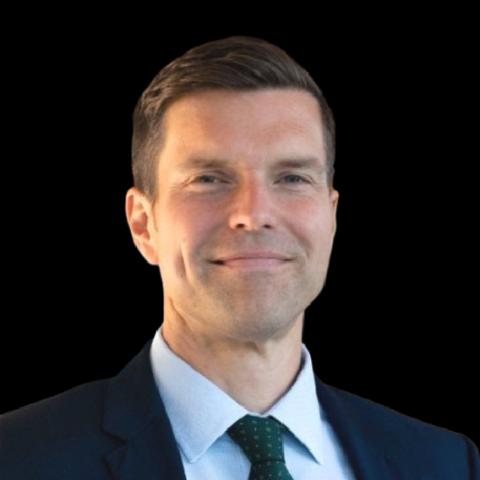
In anticipation of our Alumni in Healthcare Career Panel on February 25, 2026, we spoke with Kenneth Piercy (NY, ’06). Kenneth works at the World Health Organization (WHO) as Senior Legal Officer for the Office of the Legal Counsel in the International, Constitutional and Global Health Law Unit. Prior to the WHO, which is a United Nations agency, he worked as a legal officer at the Global Fund to Fight AIDS, Tuberculosis and Malaria and as an attorney at the Sierra Club, an environmental organization.
Read on to learn about Kenneth’s work at the WHO and his advice to those interested in working in international health law.
How did you become interested in international health law and make the transition into that field?
My interest in international law and relations dates back to my undergraduate studies in economics and international development. Even then, I hoped at some point in my career to work within the United Nations system, so the eventual move into international health law and my current role at the WHO was the realization of a long-standing professional objective. My specific transition to international health law started through a consultancy position at the Global Fund to Fight AIDS, Tuberculosis and Malaria, a role I was connected to through a law school classmate. There, I served as Legal Officer to the Office of Legal Counsel from 2011 until joining the WHO in 2014.
What is something that would be helpful for lawyers who are considering a move into global health law to understand about the field?
One thing I’d like to note is that working in international development, including global health law, is not simply a technical or professional field. Rather, it is a cause and devotion. Relatedly, the work can be greatly rewarding. For example, through my work I’ve had the opportunity to advise on legal aspects of a malaria vaccine development project, and the mass procurement of bed nets treated with insecticide targeting the insects that carry malaria. These projects helped to save many lives, and I am proud of the work and my legal contribution to the projects.
Another point worth keeping in mind is that global health law, like many aspects of international law, has a very strong diplomatic dimension. Process is important, including, often decision-making by consensus and being aware of many disparate interests across parties.
Tell us what your typical week at the WHO is like.
There is no truly typical week, but most involve a mix of legal advisory work, legal drafting, coordination across teams and responding to ad hoc urgent requests – similar, I would expect, to many in-house counsel roles. I may be advising technical colleagues on legal questions, supporting intergovernmental negotiations, reviewing proposed policies or instruments, or briefing leadership on the legal and institutional implications of emerging issues.
Recently, much of my work has focused on providing legal support to Member State negotiations on the WHO Pandemic Agreement (the pandemic treaty) and advising on the international law implications of the announced intention by the United States and Argentina to withdraw from WHO.
A typical day in a United Nations system organization also involves regular engagement with people from all regions of the world and from a wide range of cultural, linguistic and professional backgrounds, which is deeply rewarding, and which comes with its own rules and customs.
In your work, how do you balance the legal, political, policy and scientific dimensions of global health decision-making?
Effective legal advice in global health requires an appreciation of how these dimensions interact (and, at times, may conflict). A solution that is legally sound but scientifically flawed or politically infeasible is unlikely to be successful – whether success is measured by consensus among Member States, achievement of public health objectives or, ideally, both.
In practice, this means close collaboration with technical experts, careful listening to Member State and stakeholder perspectives, and framing legal analysis in a way that supports sound policy outcomes. You have to be mindful of political realities and the many factors and interests that may be in play.
Are there ways in which your experience at Davis Polk and the skills you developed at the firm have translated into your current work?
Very directly. My time at Davis Polk, where I was a corporate associate with a focus on capital markets, instilled the importance of being client-focused, highly organized and responsive under pressure. The discipline of presenting clear legal analysis and delivering tightly drafted, practical advice and legal work product remains central to my work, and I greatly value the training and experience I received at Davis Polk.
Although the context in which I now work is different, the underlying skills are the same. Whether advising a corporate client or an international organization, the ability to distill complex issues, assess risk and communicate clearly to decision-makers is indispensable. The rigor and standards I learned at Davis Polk continue to shape my professional approach.
What advice would you give to attorneys hoping to transition into international health law?
In addition to strong analytical and drafting skills, and experience and interest in international law and policy, language ability is an enormous asset. Having some proficiency in more than one of the six official UN languages can significantly expand professional opportunities. For example, in Geneva, where many of the international health law organizations are based, French can be important both for formal work and day-to-day professional engagement. More broadly, experience in regulatory, governmental or international settings is highly valuable, as is comfort working with scientific and technical subject matter. The work also requires humility, as the legal team is often in a facilitating, advisory role, and while legal considerations are always a factor, they do not always determine the outcome.
What emerging issues do you think will define the next decade of international health law?
I would expect that strengthening global preparedness and response to health emergencies will remain a defining challenge, including questions of financing, equity and access to medical countermeasures, particularly in light of the world’s response to the COVID-19 pandemic. These issues may become even more complex in an increasingly fragmented geopolitical environment, which may require the international system to do more, with fewer resources.